
Designing Software Around Operational Reality, Not the Happy Path
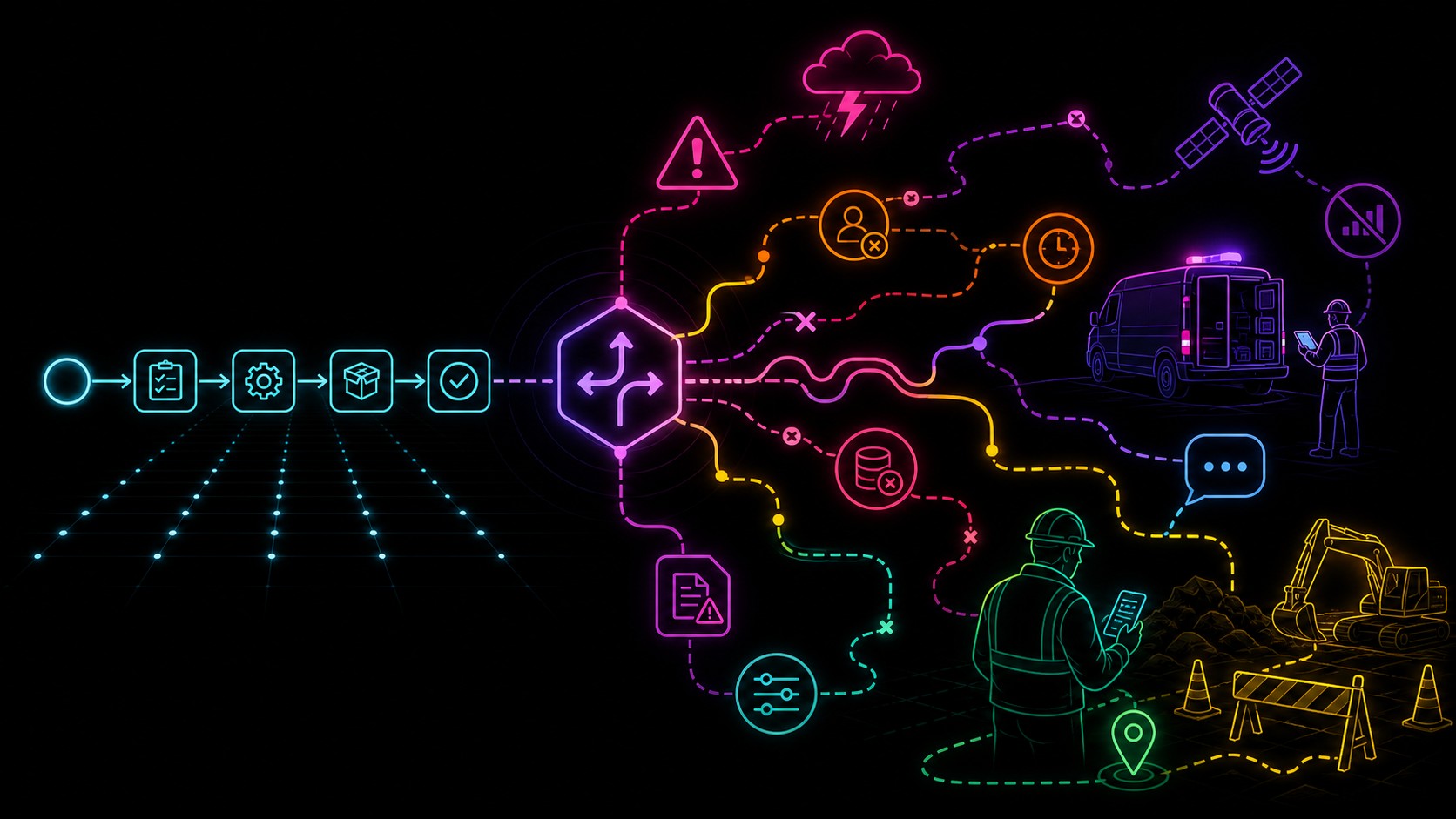
Most software demonstrations follow the happy path. A user logs in, enters valid information, submits a request and everything works perfectly. While these scenarios are useful for explaining a product, they rarely reflect how organisations actually operate. Real businesses deal with incomplete information, network failures, conflicting updates, manual overrides and unexpected exceptions every day. Designing for these realities produces systems that are resilient instead of merely functional.
The happy path represents the ideal journey through an application. Unfortunately, it is often the least interesting part of a production system. The complexity lives in everything surrounding it: what happens when a required integration is unavailable, when two people edit the same record, when approval is rejected or when someone scans the wrong barcode. These situations aren't edge cases—they're normal business operations.
One of the most effective ways to uncover operational reality is to map business workflows rather than user interfaces. Walk through each step with the people performing the work and ask what happens when something goes wrong. Where are manual decisions made? Which steps require supervisor approval? What information is commonly missing? These conversations usually reveal more valuable design requirements than a lengthy feature list.
Exception handling should be treated as a first-class architectural concern. Systems need clear rules for retries, timeouts, compensation, escalation and recovery. If a downstream service becomes unavailable, should work pause, queue automatically or continue in a degraded mode? Defining these behaviours early prevents engineers from inventing inconsistent solutions later.
Good software also makes failures visible. Users should understand what has happened, why it happened and what they need to do next. Vague messages such as "An unexpected error occurred" rarely help anyone. Operational applications should provide meaningful guidance, preserve user input where possible and offer safe ways to retry or recover.
Auditability becomes increasingly important as workflows become more complex. Recording who performed an action, when it occurred and why a decision was made provides valuable context during operational investigations. Comprehensive audit trails also support compliance, troubleshooting and continuous improvement by revealing where processes regularly break down.
Designing for operational reality naturally improves testing. Teams begin validating interrupted workflows, partial failures, duplicate requests and recovery scenarios rather than focusing exclusively on successful outcomes. These tests often uncover issues that would never appear during a traditional feature demonstration but could significantly impact production users.
Monitoring should reflect business processes as well as technical health. CPU utilisation and memory consumption are useful metrics, but they rarely explain whether orders are processing, approvals are waiting or synchronisation queues are growing. Observability is most valuable when it measures the progress of real work through the system.
Building around operational reality doesn't mean assuming everything will fail. It means recognising that change, interruption and human decision-making are inevitable parts of every enterprise application. Systems designed with this mindset are easier to support because they anticipate problems instead of treating them as surprises.
The happiest path through your application is rarely the one your users remember. They'll remember how the system behaved when something unexpected happened. Design for those moments and your software will earn trust long after the demonstration has finished.

Share your thoughts