
What Swimming Pools Teach Us About Better Technology
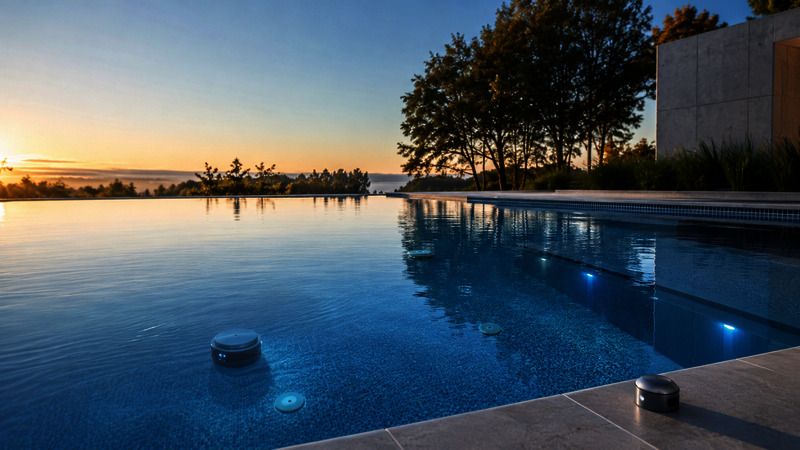
A good swimming pool looks simple from the outside.
There is water. There is a surface. There is a place to swim, play, train, cool down, recover, or sit with your feet in the shallow end pretending that counts as exercise. The experience is immediate and human. You do not need to understand pumps, filters, chemical dosing, water turnover, pressure, drainage, safety gates, or heat exchange to enjoy it.
That is exactly why pools are such a useful metaphor for technology.
The best technology also hides its machinery. Not because the machinery is unimportant, but because the user's attention belongs somewhere else. A person using a system should be able to get their work done, make a decision, find confidence, or enjoy the moment without constantly being reminded of the infrastructure beneath them.
But the simplicity is earned.
A pool that feels effortless is usually the result of continuous operational care. Water needs to circulate. Debris needs to be removed. Chemical levels need to stay within a narrow range. Pumps need maintenance. Small problems, if ignored, become expensive and visible very quickly.
Software is much the same. A calm interface often depends on a lively backstage: monitoring, backups, alerting, deployment discipline, dependency management, documentation, testing, and all the small habits that keep a system from slowly drifting into trouble.
The mistake is thinking the visible product is the whole product.
A pool is not just the blue rectangle. It is the filtration system, the maintenance routine, the safety design, the surrounding surface, the signage, the lighting, the rules, and the people who notice when something is off. Likewise, a digital product is not just the app screen. It is support, operations, data quality, release practice, incident response, accessibility, security, and the ability to change without breaking trust.
There is another lesson in pools: clarity matters.
Cloudy water changes behaviour. Even if the pool is technically safe, people hesitate. They cannot see the bottom. They cannot judge depth. They cannot tell whether something is wrong. Trust drops before a formal failure occurs.
Technology has its own version of cloudy water. Confusing status messages. Silent failures. Dashboards that hide the important signal. Processes that only one person understands. Systems that work, but cannot explain themselves.
Users do not need every internal detail, but they do need enough clarity to feel oriented. Operators need even more. A healthy system should make its state legible. It should show where attention is needed, what has changed, and whether the current conditions are safe.
Pools also remind us that automation is helpful, but not magical.
Automatic chlorinators, robotic cleaners, sensors, timers, and smart pumps can make pool ownership easier. They reduce repetitive work and catch issues earlier. But they do not remove responsibility. Someone still needs to understand what the system is optimising for, when to intervene, and what failure looks like.
The same applies to modern software teams adopting automation, AI, and platform tooling. The goal is not to remove human judgement. The goal is to spend less human energy on repetition and more on decisions that need context, ethics, taste, and experience.
A sensor can tell you the pH is drifting. It cannot decide what kind of experience you want the pool to provide. A deployment pipeline can move code safely through environments. It cannot decide whether the product change is good for customers.
The most reliable systems combine automation with ownership.
There is also a design lesson in how people use pools differently. A lap swimmer, a parent with young children, a teenager with friends, a physiotherapist, and someone recovering from surgery all experience the same pool in different ways. Good pool design accounts for that range: steps, rails, shallow areas, depth markings, lanes, seating, shade, surfaces that grip, and rules that keep different uses from colliding.
Technology should be designed with the same humility. There is rarely one "average user". People arrive with different abilities, pressures, devices, environments, and levels of confidence. A product that works only for the ideal user in ideal conditions is more fragile than it looks.
The real test is not whether the system works when everything is clean, warm, quiet, and supervised. The test is whether it remains understandable and safe when the environment gets messy.
That is where the pool metaphor becomes most practical. Build the visible experience, absolutely. Make it beautiful, useful, fast, and pleasant. But also design the circulation. Plan the maintenance. Make the state of the system visible. Decide who owns the water quality. Notice the small changes before they become big failures.
Because whether we are talking about a backyard pool, a public aquatic centre, or a piece of software used every day, trust is built through consistency.
People return to places that feel safe, clear, and cared for.
Technology should feel that way too.

Share your thoughts