
The Hidden Value of Mapping Technical Stories Back to Business Workflows
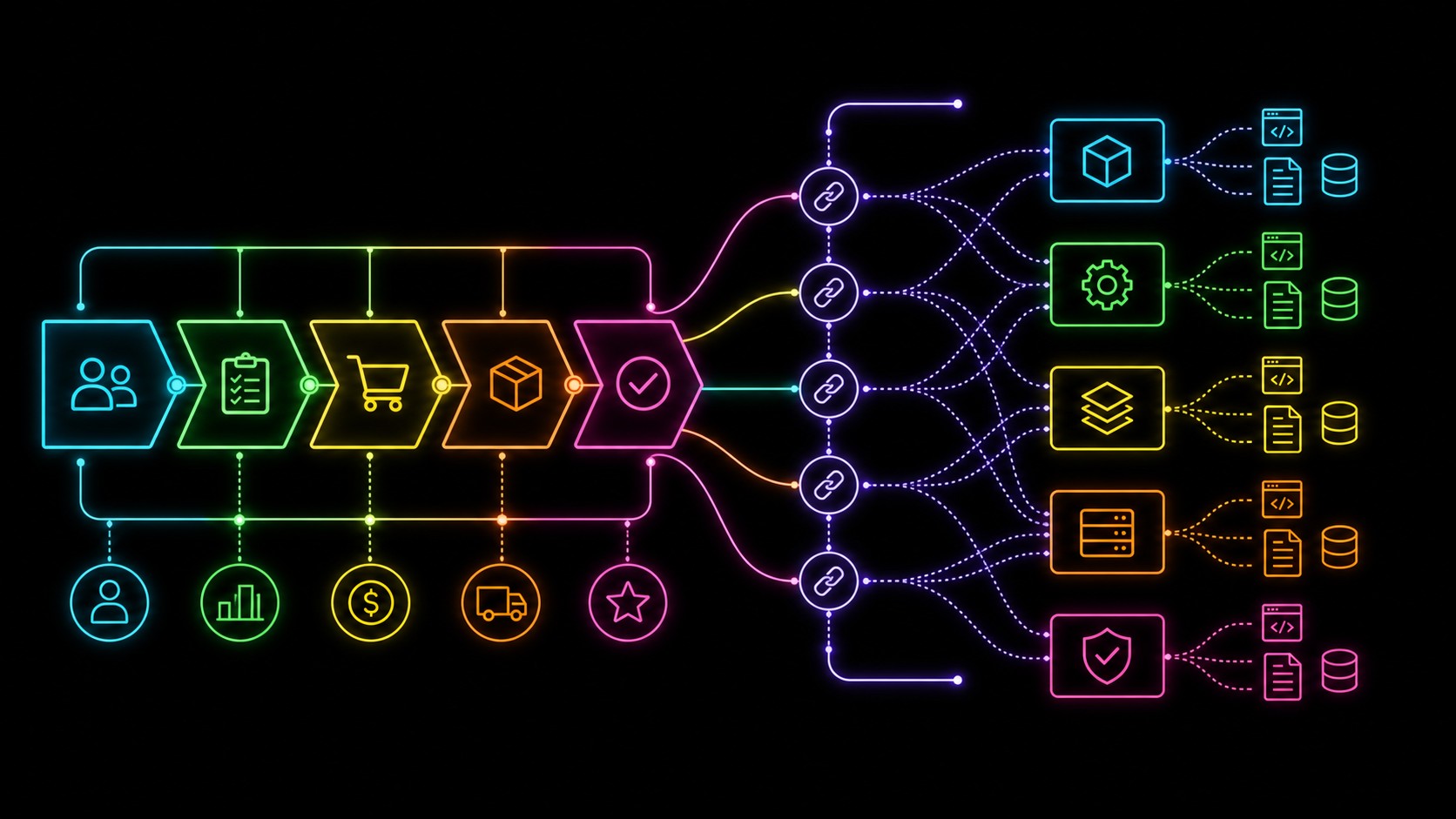
Software teams often separate business requirements from technical implementation. Business analysts document workflows, architects design systems and developers deliver technical stories. While this division of responsibility is common, it can also create a disconnect between the work being built and the problem it is intended to solve. Mapping technical stories back to business workflows closes that gap and gives every engineering task a clear purpose.
A technical story should never exist in isolation. Whether it introduces an API, changes a database schema, improves authentication or adds observability, it ultimately supports someone performing a business activity. When that relationship is visible, teams make better decisions, stakeholders understand engineering investment and future changes become much easier to plan.
Business workflows provide the context that technical stories often lack. A workflow describes how work moves through an organisation from beginning to end, including approvals, decisions, integrations and exceptions. Technical stories describe the engineering needed to enable those steps. Linking the two creates traceability from business objective through to implementation.
One immediate benefit is improved prioritisation. If a workflow supports a critical business process, the technical stories behind it naturally become more important. Conversely, engineering work attached to rarely used functionality may be deferred without significant impact. Rather than prioritising based solely on technical preference, teams can make decisions using measurable business value.
Traceability also exposes dependencies that are difficult to identify from code alone. A single workflow may rely on authentication, several APIs, multiple databases, messaging infrastructure and external integrations. Seeing these relationships helps architects sequence work more effectively and reduces the chance of unexpected blockers appearing late in delivery.
Communication improves dramatically when everyone speaks the same language. Product owners can discuss workflows instead of infrastructure. Developers understand why a seemingly small change affects multiple systems. Executives gain visibility into how engineering investment supports operational outcomes. The conversation shifts from individual tickets to end-to-end capability.
This approach also strengthens architecture documentation. Diagrams become more than collections of services and databases—they explain how technology enables business operations. New engineers learn the platform faster because they understand not only what each component does, but why it exists. During modernisation projects, workflow mapping helps identify which services can evolve independently and which require coordinated change.
Testing benefits in the same way. Acceptance tests can validate complete workflows instead of isolated endpoints. Performance testing focuses on business-critical paths. Monitoring measures how effectively work flows through the system rather than simply reporting infrastructure metrics. When a workflow slows or fails, the affected technical stories are immediately identifiable.
As products grow, this traceability becomes increasingly valuable. New features rarely stand alone; they extend existing workflows or introduce new ones. By maintaining the relationship between workflows and technical stories, teams avoid duplicating logic, overlooking dependencies or implementing inconsistent behaviour across different parts of the platform.
Maintaining these links doesn't require expensive tooling. Many teams simply reference workflow identifiers in backlog items, architecture documents and pull requests. Others organise stories beneath workflow epics or capability maps. The important part is consistency. If someone can start with a business process and quickly discover the supporting technical work, the system is providing value.
Great engineering isn't measured only by clean code or elegant architecture. It's measured by how effectively technology supports the people using it. Mapping technical stories back to business workflows keeps that purpose visible throughout delivery, ensuring every engineering decision contributes to solving a real business problem.

Share your thoughts