
Why Front-End Security Checks Do Not Protect Your API
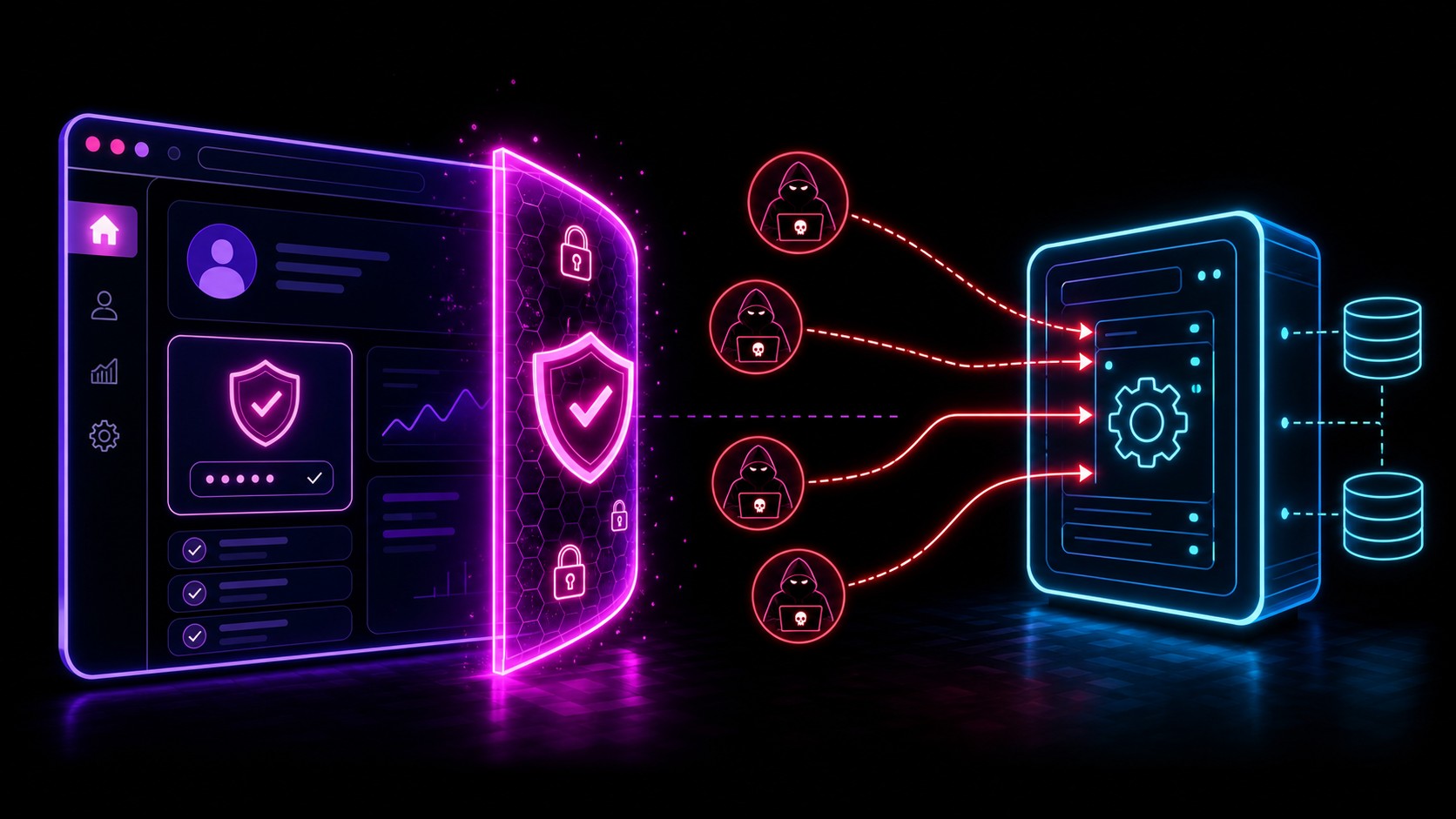
Many applications give the impression that they are secure because users cannot see administrative pages or privileged buttons. While these interface controls improve usability, they are not security boundaries. Every browser, mobile application and desktop client ultimately communicates with an API, and it is the API—not the user interface—that must decide whether a request is allowed. Relying on front-end checks alone is one of the most common mistakes in enterprise application security.
User interfaces are designed to guide people through an application, not to enforce trust. A web page might hide an Edit button for ordinary users or disable a menu item until certain conditions are met. Those decisions make the application easier to use, but they do nothing to prevent someone from sending the same request directly to the backend. If the API accepts the request without performing its own authorisation checks, the hidden button has provided no protection at all.
This is why authentication and authorisation belong on the server. Every protected endpoint should independently verify who is making the request, what permissions they hold and whether they are allowed to access the requested resource. It should not matter whether the request originated from your web application, a mobile app, a command-line client or a manually crafted HTTP request. The security outcome should always be the same.
Modern browsers make it surprisingly easy to inspect network traffic. Developer tools allow anyone to see the API calls an application performs, including URLs, request bodies and response formats. With tools such as Postman, Insomnia or curl, those requests can be reproduced without ever interacting with the user interface again. This isn't malicious behaviour—it's how developers debug applications every day—but it demonstrates why hiding functionality is never a substitute for server-side validation.
Role-based access control should therefore be implemented where the business logic lives. Before returning sensitive data or performing a privileged action, the API should validate organisational scope, ownership, roles, workflow state and any other business rules that apply. Even if the front end accidentally exposes an administrative option, the backend should still reject the request.
The same principle applies to mobile applications. Compiling business rules into a mobile app does not make them secure because applications can be reverse engineered, modified or intercepted. Treat mobile clients as untrusted consumers of your API. They may present an excellent user experience, but they should never be the final authority on whether an action is permitted.
Testing should deliberately ignore the user interface. Instead of clicking through pages, attempt to call protected endpoints directly using different identities and permission levels. Verify that unauthorised users receive appropriate responses regardless of what the interface displays. These tests often reveal security gaps that functional testing never uncovers because the UI naturally avoids invalid scenarios.
Good API design also improves maintainability. When authorisation rules are centralised in the backend, every client benefits automatically. A new web application, mobile app or third-party integration inherits the same security model without duplicating business rules across multiple codebases. This reduces inconsistency and makes future changes significantly easier.
A useful way to think about this is to imagine a secure office building. Reception staff may politely direct visitors away from restricted areas, but the locked doors and access control systems provide the real protection. Even if someone ignores the receptionist, they still cannot enter rooms without the correct credentials. Your front end should behave like reception. Your API should behave like the locked door.
User interfaces improve usability. APIs enforce security. Keep those responsibilities separate, validate every protected request on the server and you'll build applications that remain secure regardless of how users—or attackers—choose to interact with them.

Share your thoughts