
Shared Infrastructure with Terraform
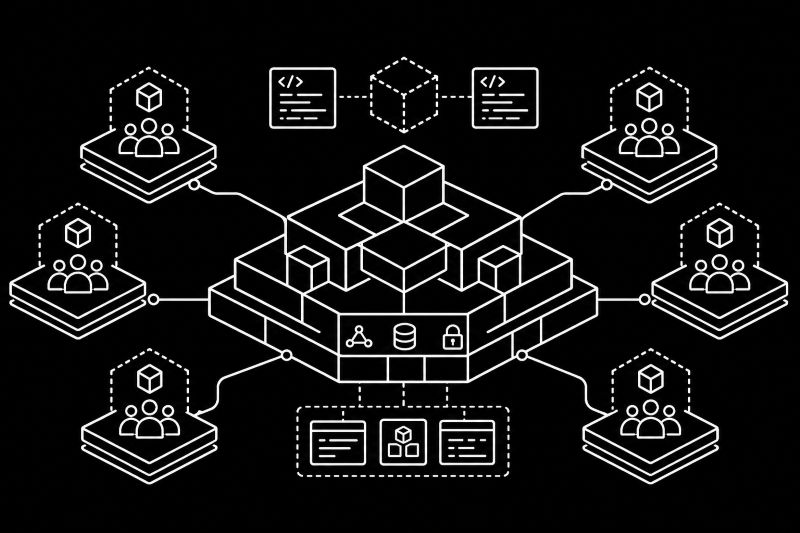
If there is one principle to keep in mind, it is this: shared infrastructure should be owned once, consumed by many teams, and changed through code rather than through manual console work. That is the basic operating model, and it is the reason shared infrastructure remains useful as systems grow. It gives you a stable foundation that application teams can rely on without each team rebuilding the same platform pieces in slightly different ways. It also gives you a clearer place to review, govern, and evolve the things that every workload depends on.
Terraform is platform-agnostic, so the pattern itself is not limited to one cloud provider. In principle, the same approach can be used across different platforms, but that does not mean it moves cleanly without effort. The provider-specific scripts, modules, identity integration, networking model, and deployment workflow usually need substantial changes before the same structure works elsewhere. Terraform gives you a common language for the infrastructure, but not a universal implementation that can be copied unchanged from one provider to another.
The reason this pattern is worth using is that it reduces duplication and keeps the platform consistent. When many teams share the same underlying infrastructure, they are less likely to invent different solutions to the same problem. That lowers drift, makes review easier, and reduces the chance that one team accidentally creates a weaker or more expensive variant of a resource. It also makes the platform easier to reason about because the important decisions live in one place instead of being spread across many repos.
What shared infrastructure is for
Shared infrastructure exists to hold the parts of the system that should not be redefined for every application. That usually includes the network, routing, ingress, compute foundations, shared storage, observability, and baseline access control. These are the sorts of resources that are expensive to duplicate, easy to configure inconsistently, and important enough that they should behave the same way across workloads. If every team owns its own version of those pieces, the result is usually more work, more risk, and less consistency than anyone wanted.
This does not mean the shared layer should own everything. Application teams still need room to manage the resources that are unique to their workload, such as task definitions, services, application-specific security rules, log groups, alarms, or feature-specific configuration. The important part is that the boundary is deliberate rather than accidental. Shared infrastructure should provide the platform, while application Terraform should define the workload that runs on top of it.
The shared stack usually publishes outputs for the parts that consuming teams need to connect to. Those outputs might include network IDs, subnet IDs, cluster identifiers, load balancer security group IDs, or shared storage references. Application stacks read those values and wire their resources to the platform without needing to know how the shared layer is built internally. That keeps the connection explicit and makes the relationship between platform and workload much easier to maintain.
Why the pattern is useful
The strongest argument for shared infrastructure is consistency. If one team needs to solve a problem that many teams will face, it is better to solve it once and let everyone benefit from the same implementation. That reduces copy-paste infrastructure, which is one of the fastest ways for a platform to become messy. It also makes policy easier to enforce because the same security, tagging, and deployment conventions can be applied in one place.
A second benefit is that onboarding becomes simpler. New applications do not need to design their own network, ingress strategy, identity model, or deployment base before they can ship. Instead, they connect to a platform that already exists and focus on the things that are unique to their product. That matters because the less time teams spend reinventing fundamentals, the more time they can spend on the actual business problem.
A third benefit is operational clarity. When the platform is owned centrally, you have one place to inspect, one place to review, and one place to improve the shared foundation over time. That makes troubleshooting easier and keeps changes to critical resources visible. It also helps the organisation understand which parts of the stack are standard platform capabilities and which parts are app-specific concerns.
The tradeoffs
Shared infrastructure does introduce coupling, and that is the main tradeoff. If many workloads depend on the same foundation, then platform changes need more care than isolated application changes. That is not a reason to avoid the pattern, but it is a reason to treat the shared layer as a managed product rather than as a loose collection of resources. The more teams depend on it, the more important it becomes to keep its interfaces stable and its rollout process disciplined.
There is also upfront design work. You need to think about module boundaries, output shape, state layout, naming, and environment separation before the system feels easy to use. That effort is real, and small projects often do not need it. But once the number of teams, environments, or deployment targets grows, the structure starts to pay for itself because it prevents the platform from fragmenting into many near-identical copies.
Another tradeoff is coordination. If a platform change affects several consuming applications, those applications may need to be updated in a particular order. That means change management matters more than it does in a single-app repository. Terraform does not remove that coordination cost; it just gives you a way to express the dependencies clearly so the process becomes manageable instead of ad hoc.
Ownership and governance
Shared infrastructure needs an explicit owner. In most organisations, that owner is a platform or infrastructure engineering group, with security and operations helping define the baseline controls and review the important patterns. Application teams should own the Terraform that defines their workload, but they should not be expected to recreate the platform underneath it. The shared repo is a platform asset, not a free-for-all where every team can edit whatever they like.
That owner is responsible for keeping the shared modules reusable, exposing stable outputs, maintaining the deployment workflow, and deciding what belongs in the platform layer. They also need to make sure production changes go through the right review and approval path. This is important because the shared layer is where the blast radius is largest, and changes here affect more than one workload. Clear ownership is what stops the platform from turning into an unmanaged dependency that everyone relies on but nobody really governs.
Application teams still have a role in shaping the platform, but that role is contribution through the right channel. If a team needs a capability that should be used by more than one workload, they should propose it as a shared resource or module. If the need is specific to one app, it should stay in the app repository. That distinction keeps the platform focused and prevents it from becoming cluttered with one-off exceptions that would be better handled closer to the workload.
How teams should use it
The practical workflow is straightforward. Application Terraform should read the shared outputs it needs and use them to connect the workload to the common foundation. That might mean reading network identifiers, cluster identifiers, ingress references, or shared storage values. The important thing is that the connection is explicit in code, not implicit in somebody’s memory or in a manual console setting.
If a development team needs something that belongs in the shared layer, they should add it there rather than recreating it in their own repository. That usually means introducing a new module, adding another instance of an existing module, or exporting a new output that other repos can consume. If the need is workload-specific, the app repo should own it. If the need is broadly reusable, the platform should own it.
The implementation discipline matters just as much as the structure. Teams should change Terraform, format it, validate it, review the plan, and apply it through the defined delivery process. Once infrastructure is managed as code, there should be no practice of click ops to create or modify resources directly in the cloud console. The console can still be useful for inspection and debugging, but it should not become the source of truth.
How to run Terraform
The exact commands vary between projects, but the pattern should stay the same. Initialise the correct backend for the target environment, format the code, validate it, and then produce a plan before applying anything. A typical flow looks like terraform init, terraform fmt, terraform validate, terraform plan, and then terraform apply. That sequence keeps the state, syntax, and intended changes visible before anything is changed in the live environment.
For shared infrastructure, the apply step should usually go through CI/CD or an approved deployment process. That keeps the shared layer auditable and reduces the chance of someone making an urgent but invisible change by hand. The console still has a role, but it is a reading role rather than an authoring role. If a resource needs to exist, it should be represented in Terraform so that its lifecycle is controlled like the rest of the platform.
The implementation shape
A practical implementation usually starts by identifying the resources that should be standard across workloads. Those become the shared modules or root-managed resources, and they are wired into a state layout that is separated by environment and region or whatever dimensions matter to the organisation. The shared layer then exports only the values that consuming applications need, which keeps the interface narrow and easier to maintain. Application repos consume those outputs and build only the resources they own.
That design is intentionally boring, because boring infrastructure is usually good infrastructure. It is predictable, reviewable, and easier to extend when a new workload appears. The point is not to centralise everything for its own sake. The point is to make the platform stable enough that teams can move quickly without needing to reinvent the basics every time.
The short version
Shared infrastructure works when one team owns the platform, many teams consume it, and every meaningful change flows through code. Terraform helps express that model in a provider-agnostic way, but moving the same pattern across providers still requires substantial provider-specific work. The payoff is less duplication, more consistency, and a cleaner boundary between platform and application responsibilities. For organisations with more than one serious workload, that is usually the safer and more sustainable way to operate.

Share your thoughts